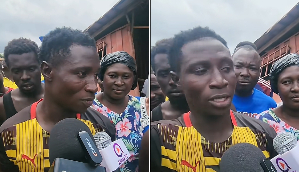
Alajo Man Allegedly Demands GHS 3,000 Before Assisting NADMO to Recover Body from Flooded Vehicle

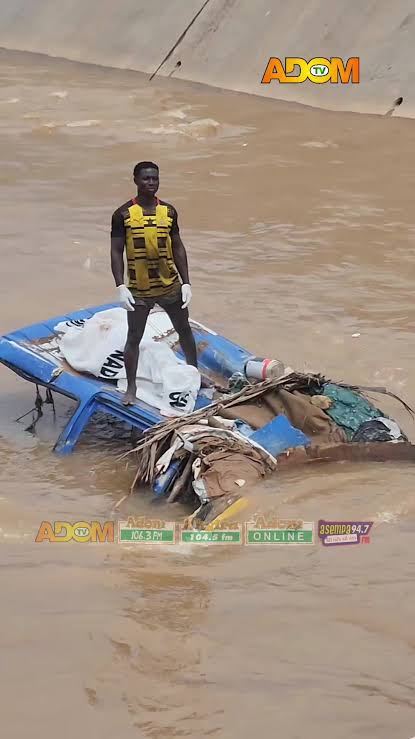
A middle-aged man from Alajo has sparked widespread public debate after reportedly demanding GHS 3,000 before agreeing to assist in the recovery of a body trapped inside a vehicle during Monday’s devastating floods in Accra.

The incident is said to have occurred in the aftermath of the torrential rains that swept across several parts of the capital, leaving roads submerged, vehicles stranded, and communities battling rising floodwaters. Emergency responders, including personnel from the National Disaster Management Organisation (NADMO), were deployed to affected areas to rescue victims and assess the extent of the destruction.
According to reports circulating online, the man, who is believed by some residents to have experience in water rescue and recovery operations, was approached to help retrieve the body from a vehicle that had become submerged in the floodwaters. However, before taking part in the operation, he allegedly requested a payment of GHS 3,000.
The reported demand has generated mixed reactions on social media and within the local community. While some people have criticised the man, arguing that moments of national tragedy require compassion and a willingness to help those in distress, others believe the situation may be more complicated than it initially appears.
Some observers have suggested that entering deep floodwaters to recover a body can be extremely dangerous. Strong currents, poor visibility, hidden debris, and contaminated water all pose serious risks to anyone attempting such an operation. From this perspective, supporters argue that if the individual was expected to put his life at risk, it would not be unreasonable for him to seek compensation for his efforts.
On the other hand, many Ghanaians have questioned whether demanding payment before assisting in the recovery of a deceased person during a disaster reflects the values of community solidarity and humanitarian service. They argue that emergencies often require people to come together to support one another rather than placing financial conditions on lifesaving or recovery efforts.
As discussions continue, there has not yet been an official statement providing full details of the incident or confirming the exact circumstances surrounding the alleged payment request. It also remains unclear whether the recovery operation was eventually carried out by the same individual or by emergency personnel.
Monday’s heavy rains caused significant flooding across several parts of Accra, disrupting transportation, damaging property, and affecting thousands of residents. In many communities, floodwaters entered homes and businesses, forcing families to seek safer locations while emergency teams worked tirelessly to rescue stranded individuals.
The flooding also renewed calls for improved drainage systems, stricter enforcement against building on waterways, and more effective waste management practices to reduce the impact of heavy rainfall in the capital. Environmental experts have repeatedly warned that blocked drains and rapid urban development continue to worsen flooding in many parts of the city.
The reported incident involving the Alajo resident has become one of the most talked-about stories following the disaster, highlighting broader conversations about emergency response, public responsibility, and the value placed on dangerous rescue and recovery work.
As authorities continue to assess the damage caused by the floods and investigate the circumstances surrounding the incident, many Ghanaians are calling for verified information rather than speculation. Until official findings are released, the public is encouraged to rely on credible sources and avoid spreading unconfirmed claims that could create confusion or misrepresent those involved.
The incident serves as another reminder of the devastating human impact of flooding and the importance of preparedness, coordinated emergency response, and community cooperation during times of crisis.
If you’d like, I can also rewrite it in a more tabloid/news blog style that’s optimized for higher reader engagement while still sounding natural.